
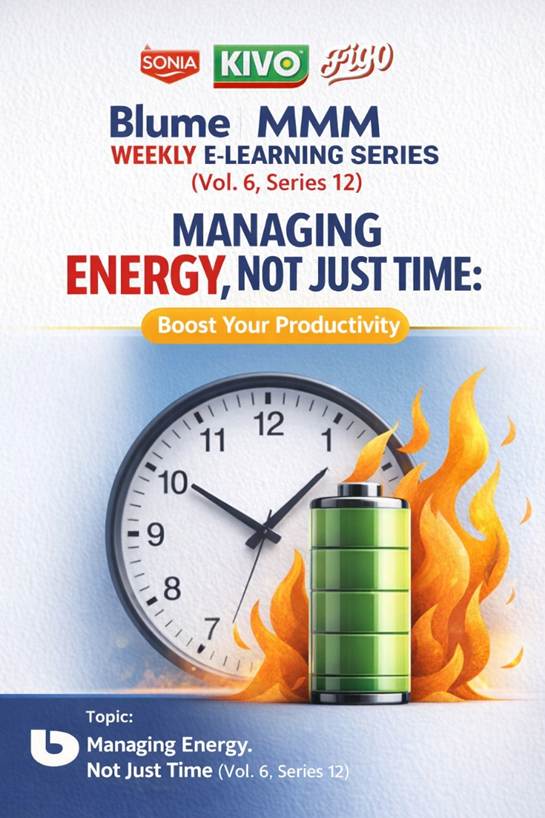
Managing Energy, Not Just Time: The Real Key to Sustainable Productivity
Productivity is often framed as a function of time management: how well we schedule, prioritize, and allocate our hours. Yet, despite perfectly structured calendars, many professionals still feel drained, distracted, and unproductive. The missing piece is simple but powerful: energy management
Time is fixed. Energy is not. While everyone has the same 24 hours in a day, not everyone has the same capacity to perform within those hours. True productivity is not about doing more things; it’s about doing the right things with the right level of energy.
Understanding Energy as a Strategic Asset
Energy is the fuel that drives performance. It influences focus, creativity, decision-making, and resilience. Unlike time, energy fluctuates throughout the day and is influenced by physical, emotional, and mental factors.
Managing energy effectively means aligning your most important tasks with your peak energy periods and intentionally renewing your energy when it dips.
“It’s not the hours you put in your work that counts; it’s the work you put in the hours.” — Sam Ewing
The Four Dimensions of Energy
To manage energy effectively, it’s important to recognize its four key dimensions:
1. Physical Energy
This is your body’s capacity to function. Sleep, nutrition, exercise, and rest play a crucial role here. Without sufficient physical energy, even simple tasks can feel overwhelming.
“Take care of your body. It’s the only place you have to live.” — Jim Rohn
2. Emotional Energy
This reflects how you feel. Positive emotions such as enthusiasm, optimism, and calmness enhance performance, while negative emotions drain energy and reduce efficiency.
“Your energy introduces you before you even speak.”
3. Mental Energy
Mental energy determines your ability to focus, think critically, and solve problems. Distractions, multitasking, and information overload can quickly deplete it.
“Where focus goes, energy flows.” — Tony Robbins
4. Spiritual Energy
This is your sense of purpose and alignment with your values. When your work feels meaningful, your energy becomes more sustainable and self-renewing.
“He who has a why to live can bear almost any how.” — Friedrich Nietzsche
Why Time Management Alone Falls Short
Traditional time management assumes that all hours are equal—but they are not. An hour spent when you are energized is far more productive than three hours spent in a state of fatigue.
For example:
- A focused 90-minute session in the morning can outperform an entire afternoon of distracted work.
- Pushing through exhaustion often leads to burnout, errors, and reduced creativity.
“You can’t manage time. You can only manage yourself.” — Peter Drucker
Practical Strategies for Managing Energy
1. Identify Your Peak Energy Periods
Track your energy levels throughout the day. Are you more alert in the morning, afternoon, or evening? Schedule your most demanding tasks during your peak periods.
2. Work in Energy Cycles
Instead of working non-stop, adopt cycles of intense focus followed by short breaks (e.g., 60–90 minutes of work, then 10–15 minutes of rest).
“Almost everything will work again if you unplug it for a few minutes… including you.” — Anne Lamott
3. Prioritize Recovery
Rest is not a luxury; it’s a necessity. Quality sleep, short breaks, and even brief walks can significantly restore energy levels.
4. Manage Your Environment
Reduce distractions, organize your workspace, and create an environment that supports focus and calmness.
5. Align Work with Purpose
When your tasks connect to a bigger goal, your motivation and energy increase naturally.
“Motivation is what gets you started. Habit is what keeps you going.” — Jim Ryun
Energy Leadership in the Workplace
For managers and leaders, understanding energy management is critical—not just for personal productivity but for team performance. High-performing teams are not those who work the longest hours but those who work with sustained, focused energy.
Leaders can:
- Encourage regular breaks and realistic workloads.
- Foster a positive emotional climate.
- Recognize and celebrate achievements
- Promote work-life balance
“Take care of your employees, and they will take care of your business.” — Richard Branson
Conclusion: Shift from Time to Energy
The future of productivity lies in shifting focus from managing time to managing energy. When you protect and invest in your energy, you naturally become more effective, engaged, and fulfilled.
Rather than asking, “Do I have enough time?”A better question is
“Do I have the energy to perform at my best?”
“Don’t just count the hours; make the hours count.”
By mastering your energy, you unlock a higher level of performance, one that is not only productive but also sustainable and deeply rewarding.
Blume MMM E-Learning Series
Thank you!
Kingsley MARE
Blume MMM Vol 6, Series 12: MANAGING ENERGY, NOT JUST TIME: THE REAL KEY TO SUSTAINABLE PRODUCTIVITY
Courtesy: BlumeJobbers self-training manual